







Main Changes That Online Learning Brought to Education
How online learning is changing education? The answer is simple — neither teachers nor learners need a classroom anymore. Today, people learn where they work and live, not where desks sit.
Over the last 20 years, the internet has turned learning into an always-on service. What can we see in 2026? Kids follow school programs from home. Adults upskill between meetings, often from a laptop or phone.
But the real shift runs deeper than “online vs offline.” Hybrid models help teams blend live sessions, self-paced modules, and in-person touchpoints.
One of the biggest trends in online learning is AI and how it supports teaching and study in new ways. It helps draft quizzes, summarize lessons, and suggest next steps. It also helps teachers run assessments and prepare content modules.
In addition to AI, online learning relies on accessibility standards. WCAG 2.2 sets the current web standard, and the EU’s European Accessibility Act applies from 28 June 2025.
This mix of changes and trends shows how technology has changed education day to day. The genie is out of the bottle — and learners won’t go back.
Change #1. With Online Learning Education Is Much Faster Now
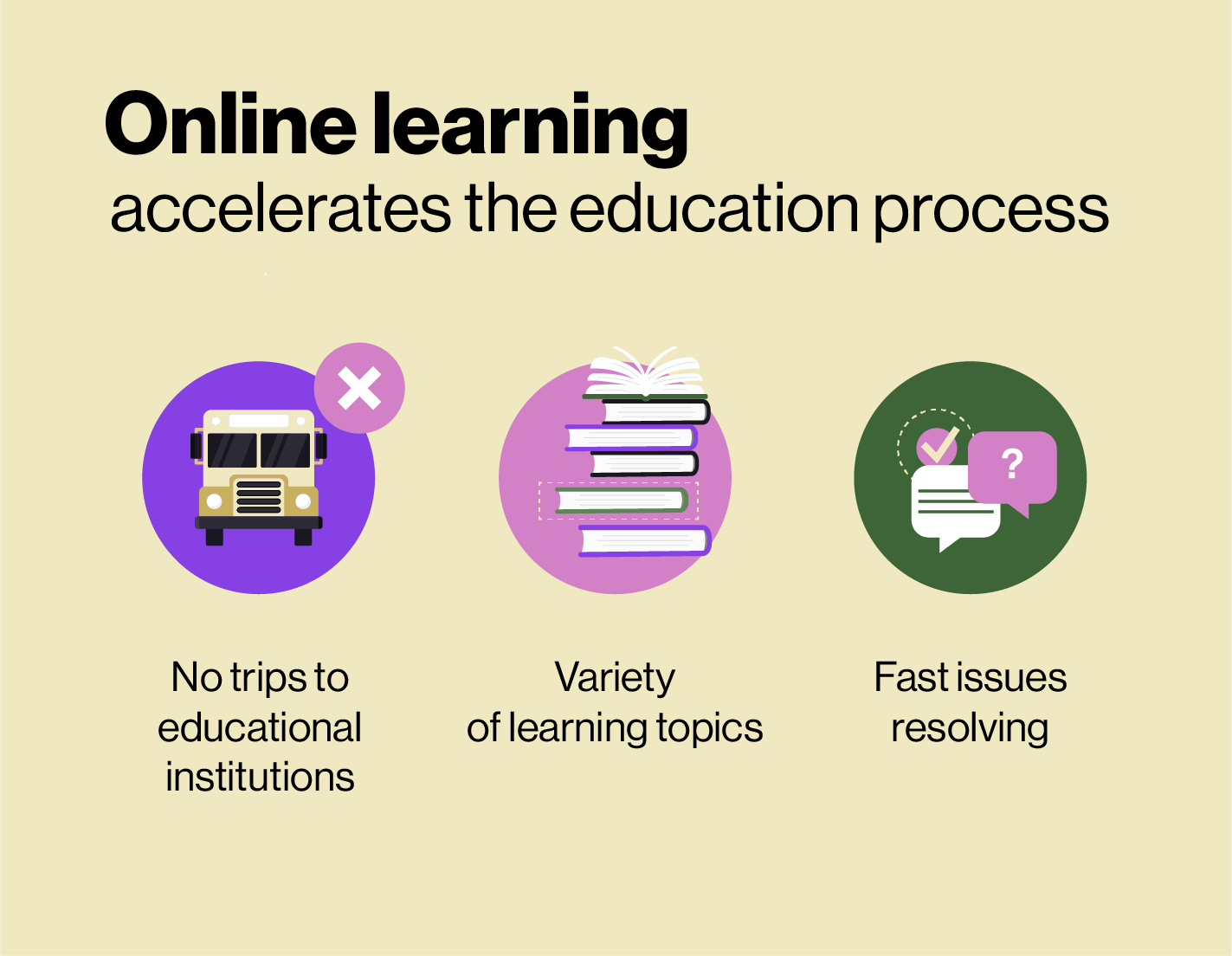
The standard format of training always implies trips to an educational institution, and such trips could often take the length of one lecture or even more. However, online learning destroys this foundation, and now the student just needs to take a laptop and go to the LMS or another online learning tool. The free time can be spent on additional training, preparation for the following lectures, and much more.
Standard teaching implies the fragmentation of training into classes. Besides that, online learning allows students to focus their attention on those topics that interest them most, which significantly accelerates the assimilation of knowledge. Learning pacing also plays a huge role. To continue studying the topic, students need to wait for the next day or even more (depending on the schedule set by the educational institution). Online learning does not interrupt learning flow. Thanks to open access to all educational material, students can learn as much as they need.
The final advantage is the quick solution to all issues that interest the student. For example, if a problem has arisen while learning new material, the student just needs to write to the teacher and get an immediate answer. There is no need to wait for the next lesson to catch the teacher in an educational institution to clarify specific issues.
Change #2. Raised Learning Efficiency
It’s all about how online education is effective in comparison to standard classes. Let’s face it, many of us were skeptical about it in the early days of online learning. It seemed to us that nothing better than regular classes would be invented, and sitting at the computer instead of a class could only harm the effectiveness of learning. However, the time has shown quite the opposite. For example, 43% of the surveyed students said that online learning is better than classes, while only 15% said it is not as good as the standard education form.
You are still not impressed with how online learning is changing education in terms of efficiency? Well, how about that. In a recent study, IBM found that participants learned nearly five times more material without increasing time spent on training. All thanks to the incredible flexibility of online learning and creating individual programs for each student. Another factor affecting efficiency is that students can develop their curriculum, and in some cases, they can also choose who they want to study with based on the trainers’ profiles.
Change #3. Collaborative Learning
It would seem that ordinary learning is also collaborative, and it is difficult to argue with that. However, online education has significantly expanded the boundaries of this collaboration. You can study in the comfort of your home in the same classroom as a student from another continent.
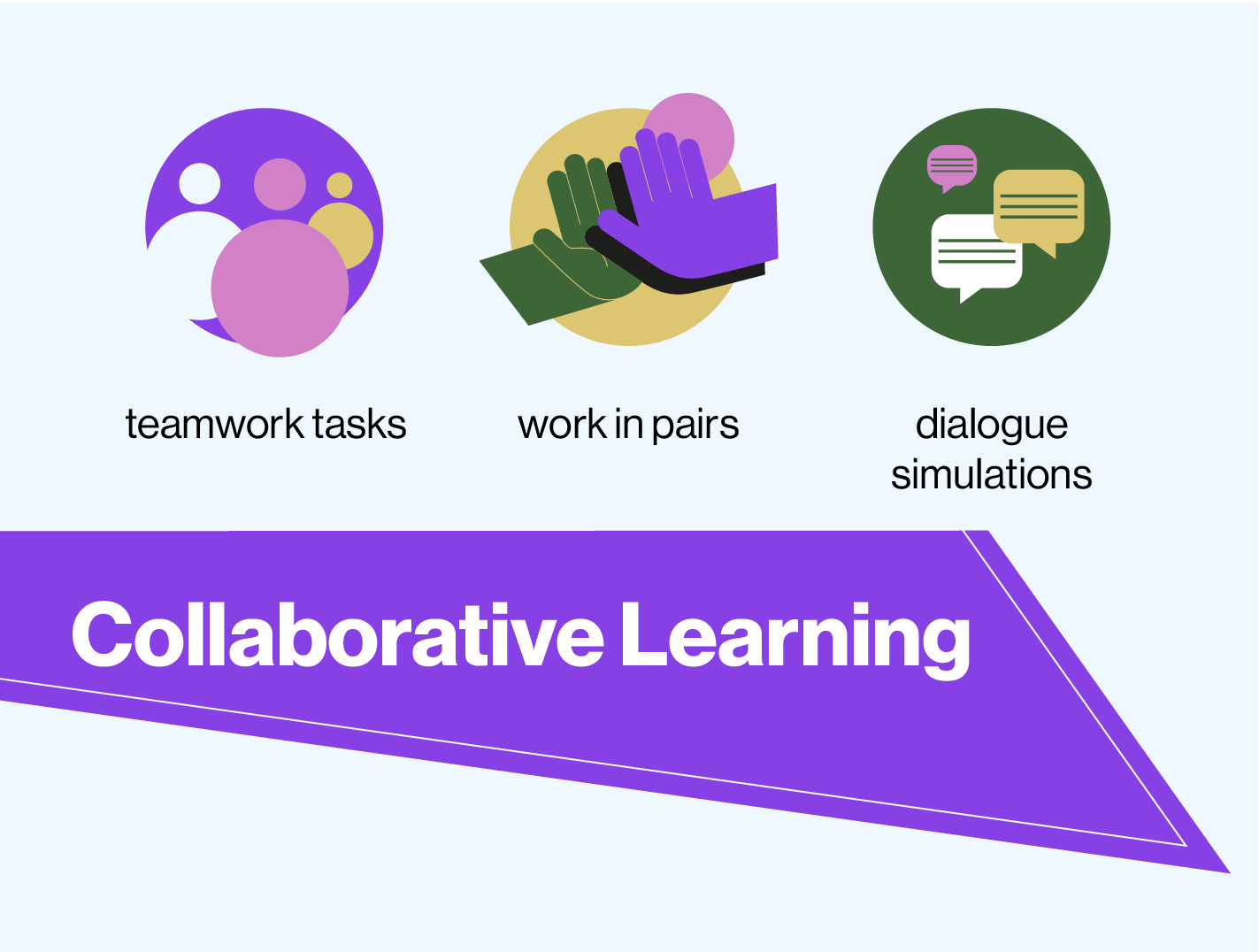
Training courses can include social learning techniques that make interaction feel less formal and more real. Think teamwork tasks, work in pairs, dialogue simulations, peer review, and group reflections.
Another way in which online learning is changing education is by moving communication and cooperation into the online space. There are chats, forums, and email for general communication. For in-class interaction and more active collaboration, teams use video calls, breakout rooms, shared docs, and digital whiteboards.
One more practical layer shows up here too: how education has changed with technology. You can see who joined, who contributed, and where the group got stuck. That gives instructors and L&D teams something better than gut feeling.
If training takes place on a computer, this does not mean that you will be alone. That is what we wanted to emphasize in this section.
Change #4. Variety of Learning Formats
Do not underestimate the diversity in the forms of learning and activities that are present within online learning. While regular classes provide a relatively limited set of learning formats, the development of technology has improved the learning process using these types of content:
-
Learning videos. It’s no secret that information in video format is absorbed many times better. This is confirmed by 85% of institutions that noted improved student performance after introducing instructional videos into their learning processes. There are many formats in training videos, such as video tutorials, presenter screencasts, webinars, and more.
-
Dialogue simulations. Dialogue simulations are one of the most popular types of eLearning content since they’re designed to simulate a real-life conversation with a third party, such as a customer. This eLearning method is ideal for teaching the skills required to handle conversations efficiently.
-
AR and VR Simulations. These technologies have revolutionized online learning. Virtual reality is a fantastic technology for teaching students both practical aspects and role-specific human interactions. In addition, these technologies are excellent for teaching complex professions and skills.
-
eLearning Games. Quite similar to the previous point, perhaps more familiar. We will omit simple gamification options such as leaderboards and achievements. We are talking about full-fledged educational games identical to those you run on a gaming console or PC.
-
Quizzes. One of the most common content formats that have not lost their popularity with the transition to online. Quizzes allow you to quickly assess student knowledge while students promptly receive feedback on their progress and learning points to improve.
-
Slide presentations. This is probably the first kind of content that comes to mind when it comes to online learning. Sequential slide presentations are still the backbone of online learning.
⭐️ Keep learning: Check out the top 8 e-learning trends to see how technology has changed education in 2026.
Change #5. Learning Flexibility and Accessibility
These features are one of the main advantages of online learning over standard classes. As we mentioned in the previous sections, accessibility standards, in particular the current WCAG 2.2 web standard, make online learning truly accessible to everyone, not just in the title.
The educator and the student set their own pace of learning, which allows to balance the learning process better and combine it with other activities. In addition, do not forget about the high availability of online learning.
Besides that, another way how education has changed with technology is that it’s opened the door to anyone who wants to learn something new. Independence is part of the deal too: an endless number of courses — paid and free — are now within reach. Thousands of topics and tens of thousands of learning hours are available in a few clicks.
Change #6. Cost-effectiveness
The final way how online learning is changing education is by bringing cost-efficiency to the educational process. All of the above advantages of online learning allow educational institutions to optimize their spendings on education. For example, online learning helps institutions to cut operating costs from 3% to 50%. In addition, this cost-effectiveness plays both ways, and students also get their benefits. Online education business is several times cheaper than college tuition since the costs disappear entirely from the costs of textbooks, living in a dorm, and other costs associated with training.
Wrapping Up
These were the main ways how online learning is changing education. As you have noticed, these changes have benefited the entire industry and have opened up new ways of delivering educational material, improving engagement and student performance. Technologies do not stand still, and who knows how else learning will change thanks to online training.
However, it would be wise to prepare for the future now, and if you want to transform your learning process, you need a complete online learning solution tailored to your needs. To create this solution, you can turn to a professional eLearning development team like us. Raccoon Gang is a team of online learning solution developers with a long list of custom-built online learning projects for businesses from all domains. Drop us a line, share your idea with us, and we’ll bring it to life with our expertise and technical skills.
FAQ
What does online learning mean today?
Online learning today is about a blend of live sessions, self-paced modules, and on-the-job practice. Instead of a handbook, educators, trainers, and, of course, learners can use mobile devices, AI, and other technology, which change education for them.
How online learning is changing education right now?
Distance learning, online courses, a multitude of electronic formats such as quizzes, gamification techniques — all of this enriches the educational process.
How has education changed with technology for access and equity?
As a course owner, trainer, or teacher, you can add captions, transcripts, screen-reader support, and low-bandwidth options to your class. The main benefit here is that more people can finish the same program without special requests.
What role does AI play in learning?
AI helps at all stages of the educational process. From creating learning modules, quizzes, etc., to directly checking tasks, providing hints, feedback, and personalized advice.
What accessibility standards matter most?
If you operate in regulated spaces, check your local requirements (often mapped to WCAG), plus EU rules like the European Accessibility Act and the EN 301 549 standard for ICT.


- Main Changes That Online Learning Brought to EducationHow online learning is changing education? The answer is simple — neither teachers nor learners need a classroom anymore. Today, people learn where they work and live, not where desks sit. Over the last 20 years, the internet has turned learning into an always-on service. What can we see in 2026? Kids follow school programs from home. Adults upskill between meetings, often from a laptop or phone. But the real shift runs deeper than “online vs offline.” Hybrid models help teams blend live sessions, self-paced modules, and in-person touchpoints. One of the biggest trends in online learning is AI and how it supports teaching and study in new ways. It helps draft quizzes, summarize lessons, and suggest next steps. It also helps teachers run assessments and prepare content modules. In addition to AI, online learning relies on accessibility standards. WCAG 2.2 sets the current web standard, and the EU’s European Accessibility Act applies from 28 June 2025. This mix of changes and trends shows how technology has changed education day to day. The genie is out of the bottle — and learners won’t go back. Change #1. With Online Learning Education Is Much Faster NowThe standard format of training always implies trips to an educational institution, and such trips could often take the length of one lecture or even more. However, online learning destroys this foundation, and now the student just needs to take a laptop and go to the LMS or another online learning tool. The free time can be spent on additional training, preparation for the following lectures, and much more.Standard teaching implies the fragmentation of training into classes. Besides that, online learning allows students to focus their attention on those topics that interest them most, which significantly accelerates the assimilation of knowledge. Learning pacing also plays a huge role. To continue studying the topic, students need to wait for the next day or even more (depending on the schedule set by the educational institution). Online learning does not interrupt learning flow. Thanks to open access to all educational material, students can learn as much as they need. The final advantage is the quick solution to all issues that interest the student. For example, if a problem has arisen while learning new material, the student just needs to write to the teacher and get an immediate answer. There is no need to wait for the next lesson to catch the teacher in an educational institution to clarify specific issues. Change #2. Raised Learning EfficiencyIt’s all about how online education is effective in comparison to standard classes. Let's face it, many of us were skeptical about it in the early days of online learning. It seemed to us that nothing better than regular classes would be invented, and sitting at the computer instead of a class could only harm the effectiveness of learning. However, the time has shown quite the opposite. For example, 43% of the surveyed students said that online learning is better than classes, while only 15% said it is not as good as the standard education form.You are still not impressed with how online learning is changing education in terms of efficiency? Well, how about that. In a recent study, IBM found that participants learned nearly five times more material without increasing time spent on training. All thanks to the incredible flexibility of online learning and creating individual programs for each student. Another factor affecting efficiency is that students can develop their curriculum, and in some cases, they can also choose who they want to study with based on the trainers’ profiles.Change #3. Collaborative Learning It would seem that ordinary learning is also collaborative, and it is difficult to argue with that. However, online education has significantly expanded the boundaries of this collaboration. You can study in the comfort of your home in the same classroom as a student from another continent. Training courses can include social learning techniques that make interaction feel less formal and more real. Think teamwork tasks, work in pairs, dialogue simulations, peer review, and group reflections. Another way in which online learning is changing education is by moving communication and cooperation into the online space. There are chats, forums, and email for general communication. For in-class interaction and more active collaboration, teams use video calls, breakout rooms, shared docs, and digital whiteboards. One more practical layer shows up here too: how education has changed with technology. You can see who joined, who contributed, and where the group got stuck. That gives instructors and L&D teams something better than gut feeling. If training takes place on a computer, this does not mean that you will be alone. That is what we wanted to emphasize in this section. [cta-green t="Want Collaborative Tools or Another Extensions That People Actually Use Direct From Your LMS?" d="Book a call with Raccoon Gang’s e-learning experts, and we’ll map the fastest upgrades for your platform and team."] Change #4. Variety of Learning FormatsDo not underestimate the diversity in the forms of learning and activities that are present within online learning. While regular classes provide a relatively limited set of learning formats, the development of technology has improved the learning process using these types of content: Learning videos. It's no secret that information in video format is absorbed many times better. This is confirmed by 85% of institutions that noted improved student performance after introducing instructional videos into their learning processes. There are many formats in training videos, such as video tutorials, presenter screencasts, webinars, and more. Dialogue simulations. Dialogue simulations are one of the most popular types of eLearning content since they're designed to simulate a real-life conversation with a third party, such as a customer. This eLearning method is ideal for teaching the skills required to handle conversations efficiently. AR and VR Simulations. These technologies have revolutionized online learning. Virtual reality is a fantastic technology for teaching students both practical aspects and role-specific human interactions. In addition, these technologies are excellent for teaching complex professions and skills. eLearning Games. Quite similar to the previous point, perhaps more familiar. We will omit simple gamification options such as leaderboards and achievements. We are talking about full-fledged educational games identical to those you run on a gaming console or PC. Quizzes. One of the most common content formats that have not lost their popularity with the transition to online. Quizzes allow you to quickly assess student knowledge while students promptly receive feedback on their progress and learning points to improve. Slide presentations. This is probably the first kind of content that comes to mind when it comes to online learning. Sequential slide presentations are still the backbone of online learning. ⭐️ Keep learning: Check out the top 8 e-learning trends to see how technology has changed education in 2026. Change #5. Learning Flexibility and Accessibility These features are one of the main advantages of online learning over standard classes. As we mentioned in the previous sections, accessibility standards, in particular the current WCAG 2.2 web standard, make online learning truly accessible to everyone, not just in the title. The educator and the student set their own pace of learning, which allows to balance the learning process better and combine it with other activities. In addition, do not forget about the high availability of online learning. Besides that, another way how education has changed with technology is that it’s opened the door to anyone who wants to learn something new. Independence is part of the deal too: an endless number of courses — paid and free — are now within reach. Thousands of topics and tens of thousands of learning hours are available in a few clicks. [cta-orange t="Your Learners Deserve a Better Experience." d="Book a quick call with Raccoon Gang’s e-learning experts and leave with a clear next-step plan."] Change #6. Cost-effectivenessThe final way how online learning is changing education is by bringing cost-efficiency to the educational process. All of the above advantages of online learning allow educational institutions to optimize their spendings on education. For example, online learning helps institutions to cut operating costs from 3% to 50%. In addition, this cost-effectiveness plays both ways, and students also get their benefits. Online education business is several times cheaper than college tuition since the costs disappear entirely from the costs of textbooks, living in a dorm, and other costs associated with training.Wrapping UpThese were the main ways how online learning is changing education. As you have noticed, these changes have benefited the entire industry and have opened up new ways of delivering educational material, improving engagement and student performance. Technologies do not stand still, and who knows how else learning will change thanks to online training.However, it would be wise to prepare for the future now, and if you want to transform your learning process, you need a complete online learning solution tailored to your needs. To create this solution, you can turn to a professional eLearning development team like us. Raccoon Gang is a team of online learning solution developers with a long list of custom-built online learning projects for businesses from all domains. Drop us a line, share your idea with us, and we’ll bring it to life with our expertise and technical skills. [faq title="FAQ"] [faq-item question="What does online learning mean today?"] Online learning today is about a blend of live sessions, self-paced modules, and on-the-job practice. Instead of a handbook, educators, trainers, and, of course, learners can use mobile devices, AI, and other technology, which change education for them. [/faq-item] [faq-item question="How online learning is changing education right now?"] Distance learning, online courses, a multitude of electronic formats such as quizzes, gamification techniques — all of this enriches the educational process. [/faq-item] [faq-item question="How has education changed with technology for access and equity?"] As a course owner, trainer, or teacher, you can add captions, transcripts, screen-reader support, and low-bandwidth options to your class. The main benefit here is that more people can finish the same program without special requests. [/faq-item] [faq-item question="What role does AI play in learning?"] AI helps at all stages of the educational process. From creating learning modules, quizzes, etc., to directly checking tasks, providing hints, feedback, and personalized advice. [/faq-item] [faq-item question="What accessibility standards matter most?"] If you operate in regulated spaces, check your local requirements (often mapped to WCAG), plus EU rules like the European Accessibility Act and the EN 301 549 standard for ICT. [/faq-item] [/faq]
- Wrapping Up