Today, using AI in your day-to-day operations is not just following mainstream trends; it is a necessity that, when done properly, results in faster upskilling, learner content ops, and clearer ROI signals. AI for training can revolutionize the way skills are imparted and assessed. In this article, we’ll cover the real benefits, tools like AI-ready LMS/LXP and xAPI-based reporting, challenges, and trends to watch when bringing artificial intelligence into corporate learning. You’ll see what to implement now and what to pilot next, so stay tuned.
What is AI in Corporate Training?
AI in corporate training uses data, machine learning, and automation to design, deliver, and measure learning tied to business outcomes. Put simply, artificial intelligence in training clarifies what AI in learning and development means: faster content production, personalized paths, and clearer links from skills to performance.
We all know how fast AI evolves, so here’s what’s new now in AI-powered corporate training:
- skills graphs that map roles to capabilities;
- copilots that draft micro-lessons and coach managers;
- agents inside Slack, Teams, or CRM that nudge people in the flow of work; multimodal simulations for practice;
- analytics that show who is gaining which skills and where work outcomes improve.
You also see private, governed models to protect IP and meet compliance needs. For L&D, this means moving from one-size courses to continuous, skills-based development with real-time feedback and proof of impact. AI makes training targeted, timely, and measurable. Start with one use case (onboarding, sales, or support), track a few KPIs, then scale what works.
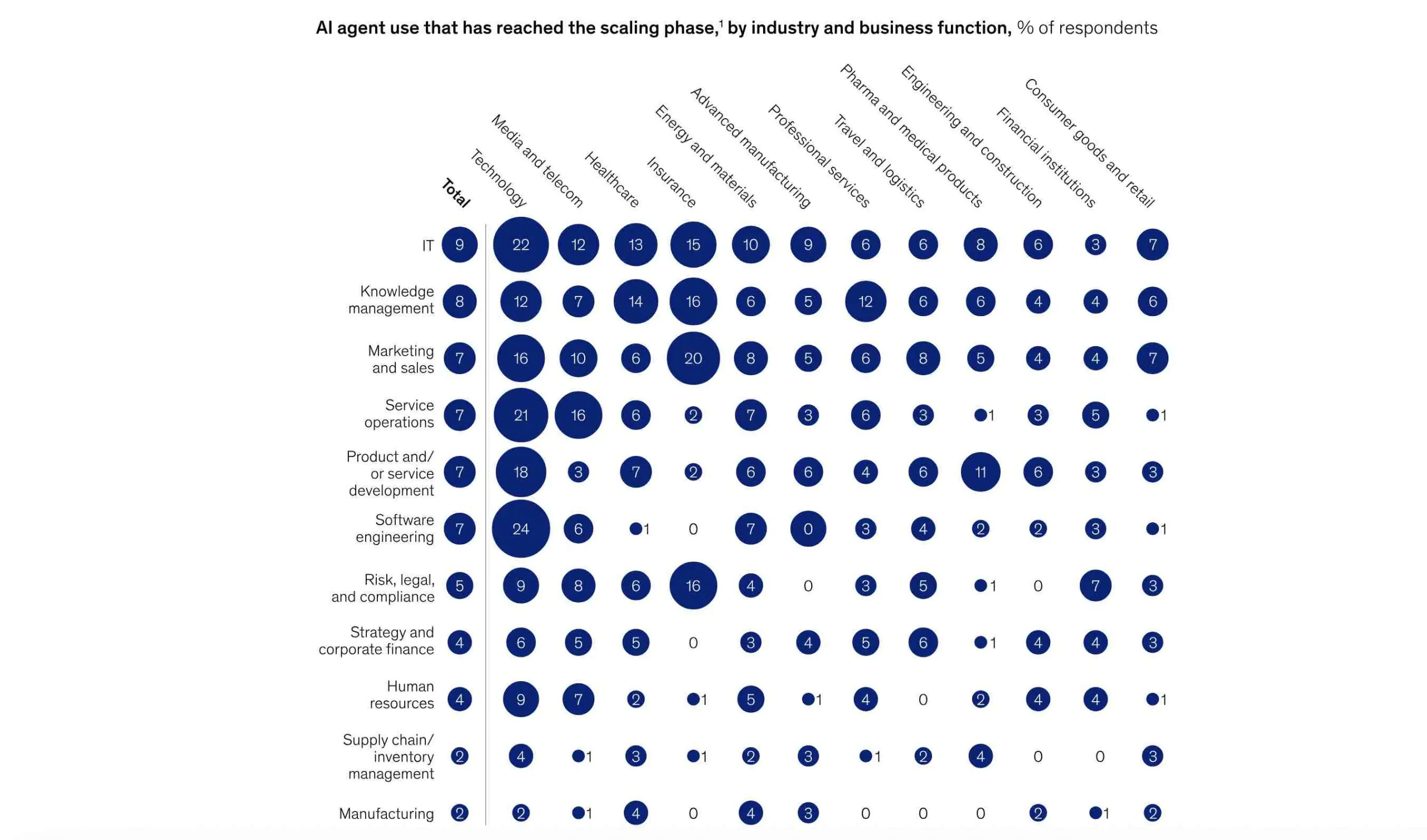
McKinsey and Company
Benefits of AI for Training & Development
Let’s look a little closer at what you are gaining from AI-based training and what core benefits leaders can expect from AI today.
Personalization & Adaptive Learning
AI builds a living skills profile from performance data, LMS activity, and role expectations. It then serves micro-lessons and practices that match each person’s gaps. People learn what they need, when they need it, without wading through extra content. Engagement rises because the path feels relevant. Adaptive engines also adjust difficulty in real time. If a seller nails product knowledge, the system shifts to objection handling. If a manager struggles with feedback, it pushes scenarios and quick tips. You get faster time-to-competency and fewer repeat sessions.
Automated Feedback & Assessments
Instead of waiting for a facilitator, learners get instant, specific feedback on quizzes, simulations, and recordings. AI flags errors, explains why, and suggests the next step. It turns assessments into coaching moments, not just grades. Completion feels less like a box-check and more like progress.
For skills that need practice—writing, calls, demos—AI scores structure, clarity, and accuracy. It highlights strong examples from peers (with permissions) and points to short refreshers. Leaders see consistent standards across teams, even at scale.
AI Coach Recommendations for Corporate Training
Think of this as a sidekick inside Slack, Teams, or your CRM. It watches real work signals—pipeline stages, tickets, code commits—and recommends a quick exercise or template. No portal hunting. Just a timely nudge that fits the moment. It can also support managers. Before a 1:1, it summarizes a rep’s recent wins, skill gaps, and a suggested micro-plan. Managers spend less time preparing and more time coaching. Over time, those small nudges compound into behavior change.
Improved Analytics and Insights
AI connects learning data to business outcomes. It tags content by skill, links it to role performance, and surfaces where training moves KPIs—win rates, resolution time, safety incidents. You stop guessing and start funding what works. It also spots patterns early. If a region lags on a new product, the system alerts L&D with likely causes and a recommended kit. If a course drives zero behavior change, it shows you the evidence. Decisions shift from opinions to signals.
Key Applications of AI in Corporate Learning
Here’s the practical side of AI in 2025: where it shows up in the stack and what it actually does. Think of this as a quick tour you can share with your ops and HR leads before the next planning cycle.
AI Employee Training Tools
Chatbots and smart tutors sit inside Slack, Teams, or the LMS and answer questions on demand. They guide practice with scenarios, score responses, and point to the next short activity. Learners get help in the moment, not weeks later.
- Ask “Which form for this client?” and get the policy snippet.
- Practice a customer call, receive feedback on clarity and compliance.
- Pull a one-page job aid before a shift.
- Escalate to a human coach when confidence is low.
AI-based Training Programs for Compliance and Skills
AI turns compliance from an annual chore into an adaptive, risk-based program. It assigns modules by role and region, shortens content for experts, and deepens practice for higher-risk staff. Audits go faster because evidence is organized and current.
- Auto-assign training from rules and org changes.
- Adjust scenarios based on each response pattern.
- Track attestations, expiries, and retraining windows.
- Flag regulation updates with recommended course edits.
Content Creation with AI
Content teams use AI to draft micro-lessons, rewrite for clarity, and update examples. SMEs review and approve; version control and style checks keep quality stable. Net effect: faster refresh cycles and less backlog.
- Convert an SOP into a 10-minute course with a quiz and answer rationales.
- Localize modules and keep terms consistent.
- Generate scenario branches from common tickets or calls.
- Produce checklists and quick-reference cards for the field.
Performance Tracking
AI connects learning events to business signals. It infers skills from work data, highlights leading indicators, and suggests where to double down—or stop. Managers see skills heatmaps, not just course completions.
- Tie training to KPIs like win rate or resolution time.
- Spot at-risk teams early and recommend a targeted kit.
- Run A/B tests on content and compare impact.
- Summarize team progress ahead of QBRs and 1:1s.
These applications put training in the workflow, keep content fresh, and show the business impact. Start with one workflow, measure one KPI, and scale from there.
Challenges & Risks of AI in Training
Of course, assessing one’s risks and challenges should be one of the most important steps before adopting any new technology. Our professionals gathered the most common challenges but also gave examples of their solutions, so you would not feel lost when encountering a roadblock. Here are the tough parts of AI in training:
- Data privacy and security. Training data often includes PII and sensitive docs. Poor controls or third-party tools can expose it and trigger regulatory issues.
- Bias in AI algorithms. Models mirror their data. Skewed outputs can misguide promotions, pay, or performance calls.
- Resistance to adoption. Learners and managers may not trust AI or fear “being watched. ” Without change management, usage stalls.
Practical Solutions
1) Lock down data from day one.
We deploy Open edX with SSO, role-based access, and audit logs. For AI features, we isolate PII, redact uploads, and keep analytics at the cohort level when possible. Our RG Analytics module gives instructors actionable progress views without exposing more data than needed; in the Harrow project, that meant real-time course signals instead of raw personal details.
Result: cleaner audits, faster responses to access requests, and fewer accidental leaks.
2) Build a bias check into content ops.
We wrap AI content generation with SME review and approval flows inside Open edX Studio. Teams use test prompts and rubrics to compare outputs across cohorts, then A/B the revised versions. Analytics flag uneven outcomes (e.g., scenario pass rates by region), so designers tune examples and assessments before wide release.
Result: fewer blind spots, with a documented trail of changes if compliance asks.
3) Treat adoption as a change program, not a feature.
Start with one use case tied to a KPI—onboarding time, first-call resolution, or safety incidents. Ship short, in-flow experiences (chat assistants, micro-lessons), not another portal. We’ve delivered Open edX mobile apps so field staff can practice on breaks, and we run “manager enablement” so leaders coach with the same AI insights.
Result: steady usage, visible wins, and a clear case to scale.
4) Plan for scale and longevity.
We’ve migrated and tuned Open edX for large user bases (e.g., 20k+ MAU) and keep content refresh cycles lean with version control and templates. When regulations change, content owners update once; the system propagates changes across cohorts and languages.
Result: you stay current without rebuilding your stack each quarter.
AI in training works when privacy is engineered, bias is measured, and adoption is managed. If you want a reliable partner to start or scale safely, Raccoon Gang brings the Open edX expertise, analytics tooling, and delivery guidebooks to make it stick. Our experts have a profound experience in finding those roadblocks and bringing their best to manage them — keep reading and see for yourself.
AI Training for Companies: Real Use Cases
Now, let’s get practical and see how bringing AI into your corporate training processes reflects on your workflow, backed by real-life examples.
Onboarding Automation
New hires don’t need a maze of links. With an online training software backed by AI, you can auto-assign role-based paths, answer day-one questions in chat, and track completion without chasing people. We’ve built onboarding flows that bundle content, tasks, and sign-offs into one experience, reducing time-to-productivity. Then we extend it into the tools people already use. Mobile apps keep learning moving between shifts; managers see who’s stuck and where to help. The result is fewer handoffs and cleaner audit trails for HR.
Reskilling and Upskilling
When roles change, AI maps skills to content and serves short, targeted practice. We’ve delivered Open edX–based solutions that support skills catalogs, cohorts, and on-the-job nudges — fast to update and easy to scale across regions. Teams also need flexible delivery. Mobile learning supports quick refreshers in the field, while curated catalogs cover deeper paths. Our guides outline platform options and selection criteria, helping IT and L&D align on stack and cost.
Safety and Compliance Training
Compliance works best when it’s continuous. AI adapts scenarios by risk profile, tracks attestations, and surfaces gaps before audits. Our RG Analytics brings real-time views of problem areas, so owners can fix content and retrain fast. You can see this in practice in our Harrow case study: instructors got actionable, course-level reports to monitor progress and intervene early. We’ve packaged the same approach into guidebooks for corporate environments, backed by our analytics guidance.
Future of AI in Corporate Training
It is obvious that AI’s impact on every aspect of corporate life continues to grow, and prognoses for the future, starting with artificial intelligence in corporate learning in 2026, show that embracing it and using it as a vital tool is the right way to go. By late 2026, AI won’t sit in a separate tool—it will be embedded in core apps. Recent research projects 40% of enterprise applications will include task-specific AI agents, pushing training into the flow of work. Meanwhile, worldwide IT spend is set to top $6.08T in 2026, and AI-centric systems spending is forecast to surpass $300B — tailwinds for AI-ready LMS, analytics, and skills graphs.
Capital spending will keep building the runway. Industry experts expect AI capex to hit ~$490B in 2026, while 78% of companies already use AI in at least one function—momentum that will pull L&D along. Still, readiness is mixed: only 2% of enterprises are fully prepared, so governance, data quality, and security will share the stage with new features. Use this to your advantage — get ahead of your competitors by following the right steps to boost your readiness for AI-governed business processes. And if you need a reliable partner to guide you, Raccoon Gang will be your perfect match.
Conclusion
AI-powered corporate training ties learning to business results. It personalizes paths, gives instant feedback, and brings coaching into the tools people already use. Most importantly, it shows which programs move KPIs like ramp time, win rate, and safety incidents. That’s why AI belongs on the roadmap in 2026. And if you need a hand, Raccoon Gang can help you plug AI into your LMS with confidence. If you’re ready to make training measurable and continuous, we’re ready to build it with you.